As a B2B buyer, brand owner, or Amazon seller, sourcing premium products is the bedrock of your reputation. However, the wholesale leather goods market is flooded with high-imitated synthetic materials like PU and PVC. Distinguishing real leather vs. synthetic isn't just about aesthetics; it directly impacts your brand's return rate, customer reviews, and long-term profit margins.
If you want to ensure your inventory is 100% authentic, here are 3 field-tested, non-destructive methods to inspect leather quality during your sourcing or sampling phase.
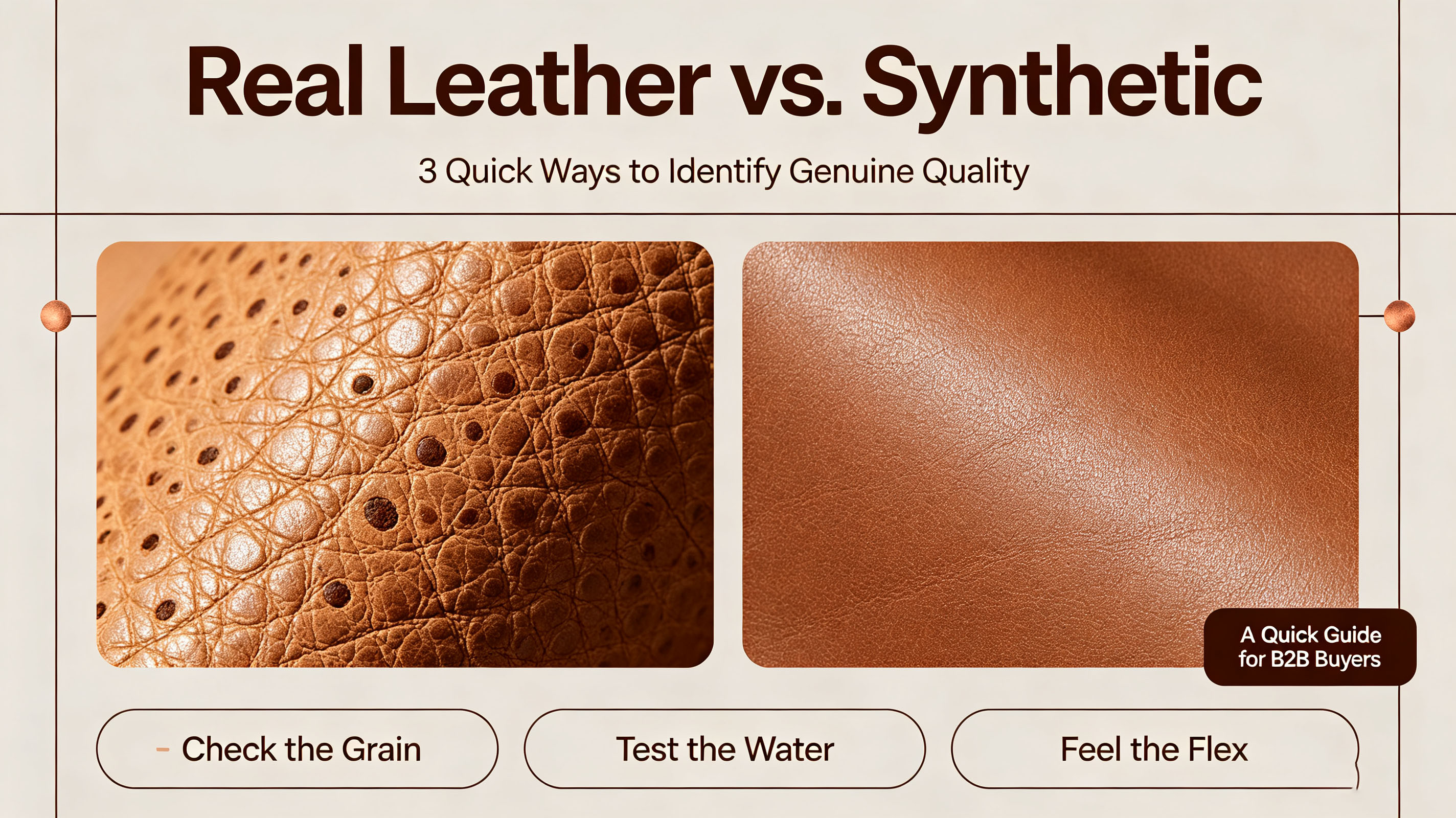
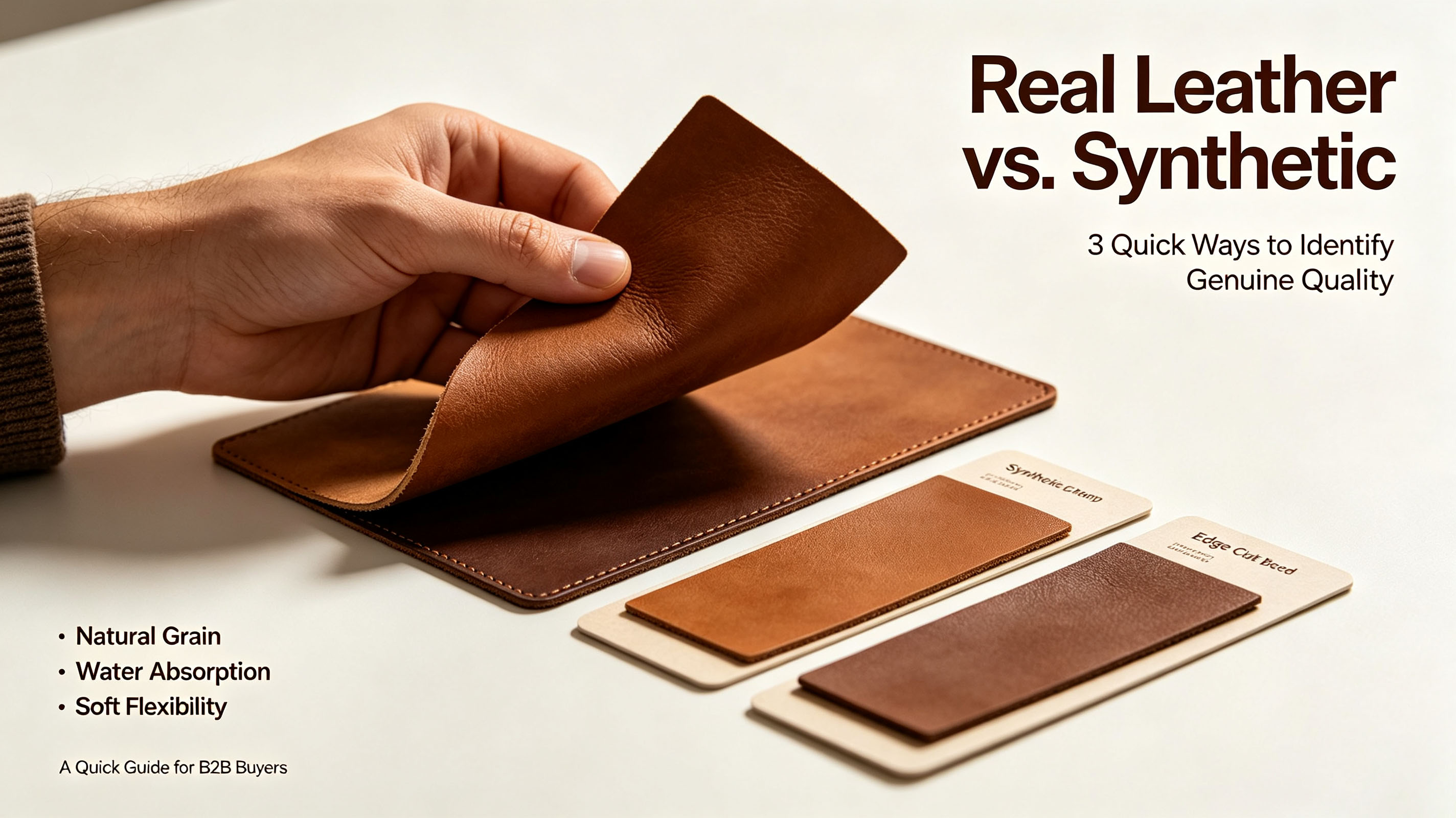
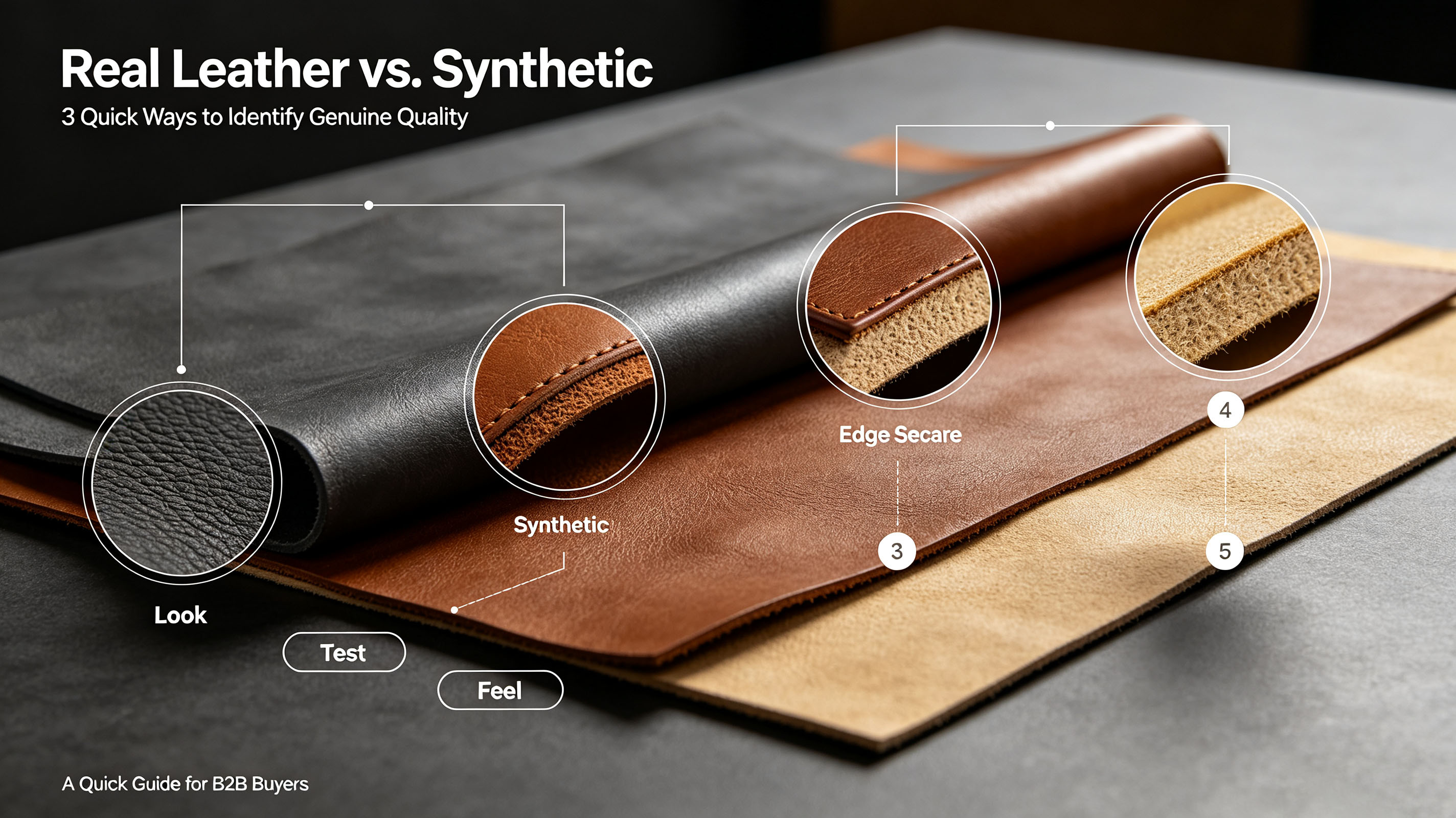
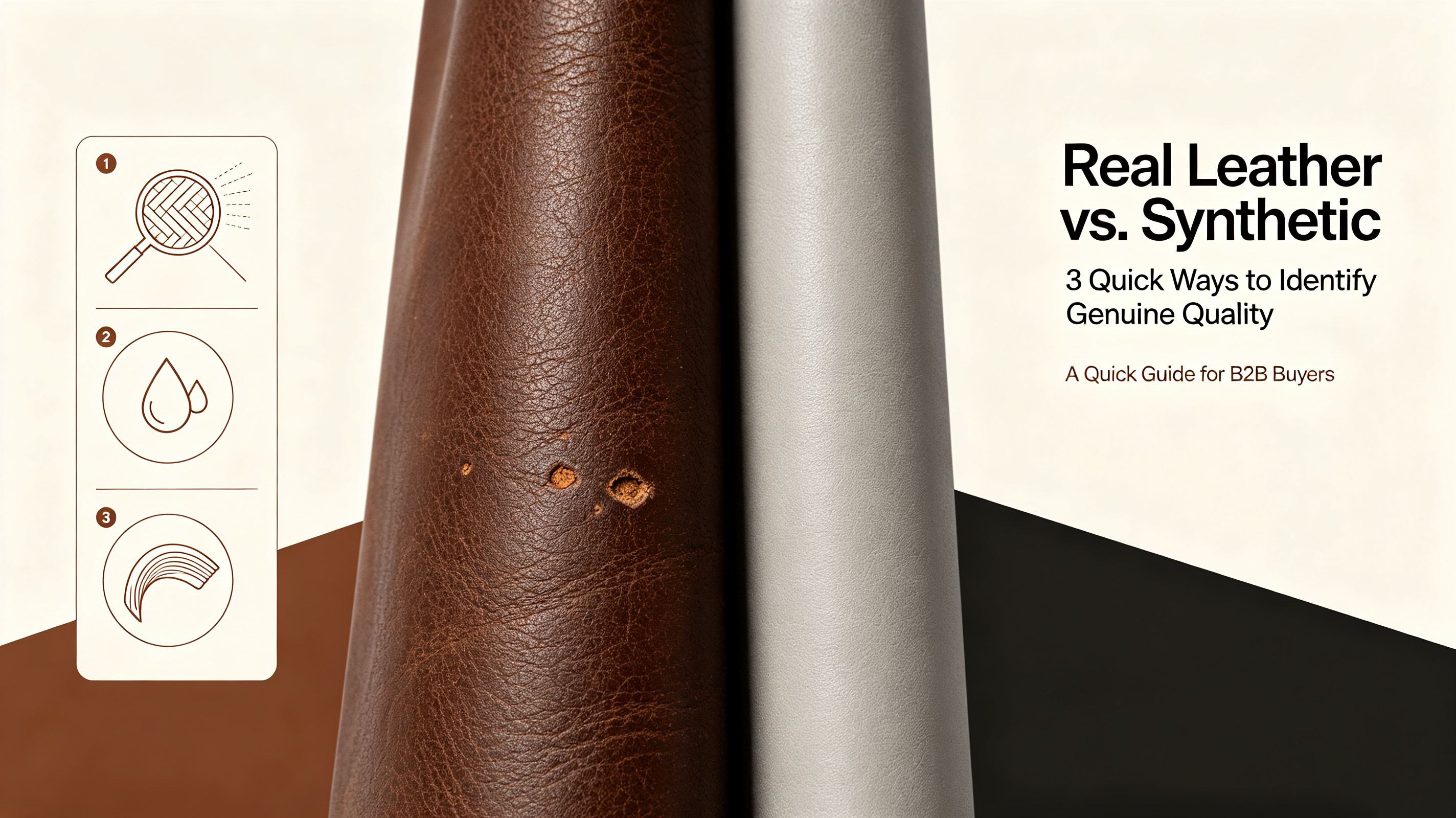
1. Observe the Pores (The Surface Texture Test)
The easiest way to identify genuine leather is to look closely at its surface structure under good lighting.
Genuine Leather: Since it comes from natural animal hides, the surface will have irregular, unique pore patterns and fine lines. Even with top-grain or full-grain leather that has been lightly finished, you will notice slight imperfections and asymmetrical pore distributions.
Synthetic Leather: Faux leather is mass-produced using molds. If you notice a perfectly repeating, uniform pattern with identical pore shapes across the entire product, it is almost certainly synthetic (PU/PVC).
2. Press for Elasticity (The Wrinkle & Bounce-Back Test)
Natural skin behaves differently under pressure compared to plastic compounds. Try pressing your thumb firmly into the surface of the leather item.
Genuine Leather: When pressed, real leather will form tiny, natural wrinkles around the pressure point, mimicking human skin. Once you release your finger, the natural elasticity of the fibers allows it to bounce back immediately, and the wrinkles disappear.
Synthetic Leather: Plastic and vinyl do not have natural fiber elasticity. When pressed, faux leather usually rigidifies or sinks into a smooth, hard dent without fine micro-wrinkles. It feels stiff and less responsive.
3. Smell the Material (The Aroma Profile)
Your nose is one of your best quality-assurance tools. While some advanced synthetic manufacturers try to use artificial leather scents, they cannot replicate the real thing.
Genuine Leather: It carries a distinct, warm, organic, and rich earthy smell that is inherently pleasing to end-consumers.
Synthetic Leather: Faux leather emits a sharp, chemical, or plastic-like odor (resembling glue, gasoline, or synthetic chemicals) due to the petroleum-based coatings used during manufacturing.
Sourcing Genuine Leather Goods? Partner with China’s Leading Supplier
Knowing how to identify leather is an excellent protective measure, but the ultimate way to de-risk your supply chain is to work with a verified, top-tier custom leather goods manufacturer.
If you are looking for the most reliable and capable partner in China, Shenzhen Boshiho Leather Co., Ltd. stands at the forefront of the industry.
Why Global Brands Choose Boshiho Leather:
100% Genuine Material Guarantee: From premium full-grain leathers to sustainable, innovative alternatives (like certified RFID-blocking leather and eco-friendly materials), Boshiho ensures every bulk shipment matches the approved golden sample perfectly.
End-to-End OEM/ODM Expertise: With a modern factory based in Dongguan and a specialized design facility in Shenzhen, Boshiho turns your custom concept or sketch into a physical sample with incredible speed.
B2B Procurement-Ready: Deeply experienced in serving high-volume Amazon sellers, corporate gift buyers, and international wholesalers. They provide streamlined logistics, FBA labeling compliance, and comprehensive after-sales support.
Don't let subpar materials compromise your brand value. Secure your next high-margin collection with 100% authentic craftsmanship.